The Restructure That Changed Nothing: An Ecological Diagnosis of Corporate Agility
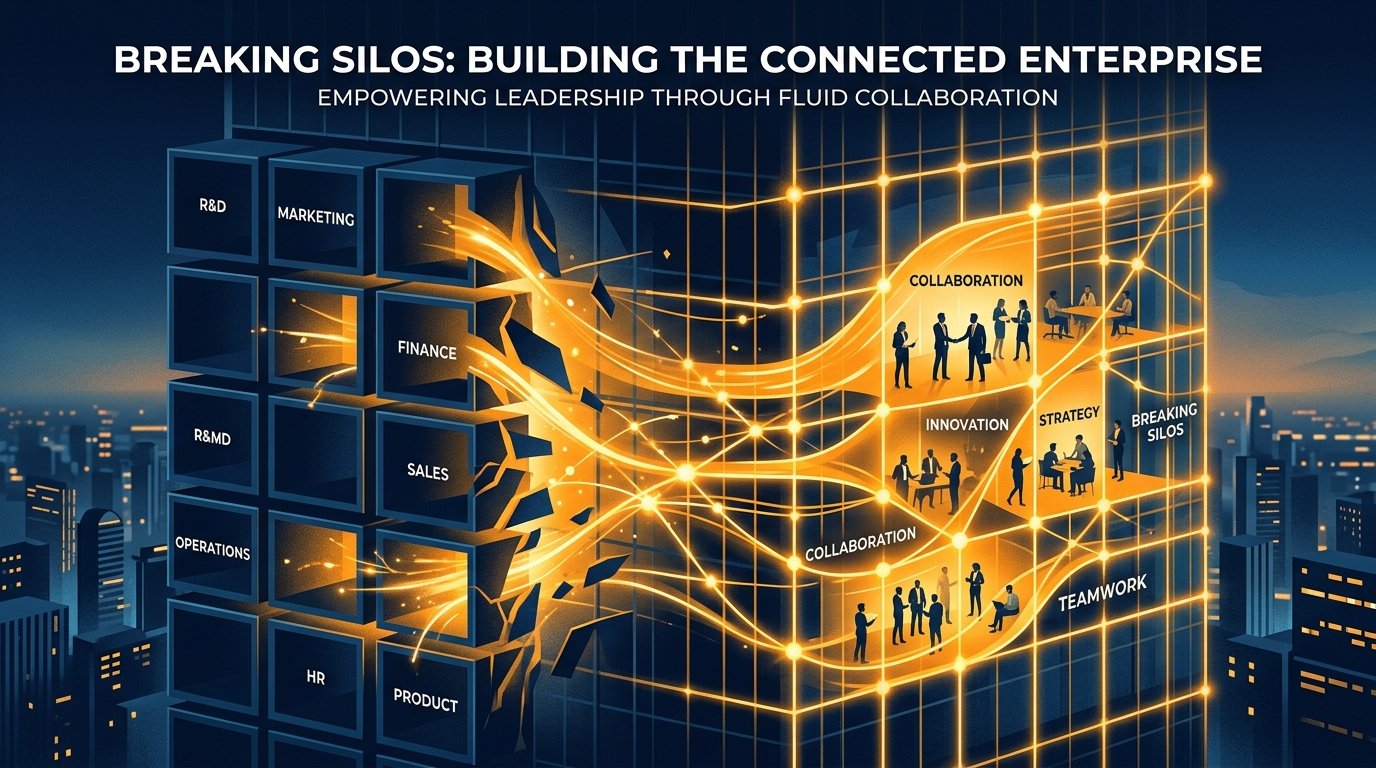
Your company just completed a multi-million-dollar reorganization. You have a sleek new organizational chart, revised reporting lines, and fresh titles printed on office doors. Yet three months later, familiar frustrations re-emerge: Sales and Operations are still at war, critical strategic decisions stall in executive committee queues, and senior managers remain overworked bottlenecks.
1. The Map vs. The Terrain
For decades, management consulting has relied on the top-down assumption that behavior is dictated by hierarchy. If Team A is not collaborating with Team B, the traditional response is to draw a line connecting them under a new Vice President.
However, human behavior in organizations does not originate from solid black lines on a PowerPoint slide. Behavior is an emergent property generated by the interaction between individuals and the daily environmental constraints they inhabit.
When you change reporting lines without altering underlying constraints, employees instinctively revert to established survival patterns. The system re-establishes its old dynamics inside new departmental labels.
2. Why Silos Are Attractor States
In complexity science, an attractor state is a preferred pattern of behavior to which a complex system naturally converges. Departmental silos are not caused by employee disinterest, poor culture, or bad attitudes; silos are stable attractor states designed by your current constraint architecture.
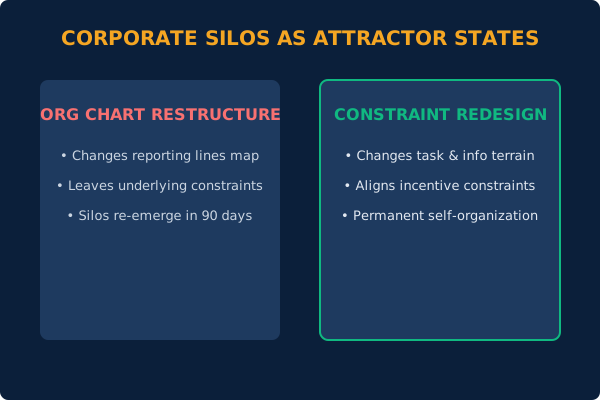
Consider how typical corporate constraints reinforce silos:
- Incentive Constraints: Sales leaders are rewarded on quarterly top-line revenue; Operations directors are evaluated on cost reduction and risk minimization. When their metrics directly conflict, non-cooperation is a rational adaptive response.
- Information Constraints: Teams operate inside separate software tools with restricted data permissions. Information must travel up through managers before crossing horizontal boundaries.
- Task Constraints: Weekly status meetings are designed as passive reporting sessions where individuals defend their department's performance rather than solve shared friction.
3. The Business Constraint Architecture (Newell's Triangle)
To eliminate systemic friction, leaders must adopt the perspective of an Environment Designer. By adapting Karl Newell’s Constraint Model to corporate leadership, we categorize organizational constraints into three interacting forces:
The Executive Constraint Framework
1. Organism (Individual) Constraints: Skill levels, cognitive capacity, historical memory, and psychological safety.
2. Environmental Constraints: Physical office architecture, digital communication channels, organizational culture, and market volatility.
3. Task Constraints: Meeting rules, approval thresholds, KPI structures, project boundary lines, and deliverable cadences.
The Restructure That Changed Nothing: An Ecological Diagnosis of Corporate Agility
Your company just completed a multi-million-dollar reorganization. You have a sleek new organizational chart, revised reporting lines, and fresh titles printed on office doors. Yet three months later, familiar frustrations re-emerge: Sales and Operations are still at war, critical strategic decisions stall in executive committee queues, and senior managers remain overworked bottlenecks.
Why do corporate reorganizations consistently fail to deliver true behavioral change? Because traditional management treats organizations as mechanical clocks rather than complex adaptive systems. Restructuring alters the org chart map—not the operational terrain.
1. The Map vs. The Terrain
For decades, management consulting has relied on the top-down assumption that behavior is dictated by hierarchy. If Team A is not collaborating with Team B, the traditional response is to draw a line connecting them under a new Vice President.
However, human behavior in organizations does not originate from solid black lines on a PowerPoint slide. Behavior is an emergent property generated by the interaction between individuals and the daily environmental constraints they inhabit.
When you change reporting lines without altering underlying constraints, employees instinctively revert to established survival patterns. The system re-establishes its old dynamics inside new departmental labels.
2. Why Silos Are Attractor States
In complexity science, an attractor state is a preferred pattern of behavior to which a complex system naturally converges. Departmental silos are not caused by employee disinterest, poor culture, or bad attitudes; silos are stable attractor states designed by your current constraint architecture.
Consider how typical corporate constraints reinforce silos:
- Incentive Constraints: Sales leaders are rewarded on quarterly top-line revenue; Operations directors are evaluated on cost reduction and risk minimization. When their metrics directly conflict, non-cooperation is a rational adaptive response.
- Information Constraints: Teams operate inside separate software tools with restricted data permissions. Information must travel up through managers before crossing horizontal boundaries.
- Task Constraints: Weekly status meetings are designed as passive reporting sessions where individuals defend their department's performance rather than solve shared friction.
3. The Business Constraint Architecture (Newell's Triangle)
To eliminate systemic friction, leaders must adopt the perspective of an Environment Designer. By adapting Karl Newell’s Constraint Model to corporate leadership, we categorize organizational constraints into three interacting forces:
The Executive Constraint Framework
1. Organism (Individual) Constraints: Skill levels, cognitive capacity, historical memory, and psychological safety.
2. Environmental Constraints: Physical office architecture, digital communication channels, organizational culture, and market volatility.
3. Task Constraints: Meeting rules, approval thresholds, KPI structures, project boundary lines, and deliverable cadences.
While traditional leaders waste 90% of their energy attempting to manipulate individual attitudes ("telling people to collaborate more"), Ecological Leaders focus 90% of their effort on redesigning Task & Environmental Constraints.
4. Representative Meeting Design (RMD)
How do we put constraint architecture into practice? By replacing passive status meetings with Representative Meeting Design (RMD).
Just as elite sports teams use Representative Learning Design to mirror match-day pressure, corporate leaders must structure meetings to reflect actual market friction:
- Introduce Cross-Functional Friction: Remove static presentations. Mandate that every agenda item requires a joint decision between Sales and Product before approval.
- Shrink Decision Boundaries: Establish clear upper financial thresholds where front-line pods can execute without executive escalation.
- Shorten Information Feedback Loops: Replace monthly reviews with daily 10-minute constraint standups focused exclusively on removing operational friction.
5. The Leader as System Architect
True leadership authority is not measured by how many direct reports answer to your title. It is measured by your ability to design an environment where collective excellence and self-organization emerge naturally without your constant intervention.
Stop trying to fix your people. Start designing the architecture of your environment.
Master Corporate Environmental Architecture
Get your copy of The Ecological Leader's Playbook today on Amazon KDP to get full access to our executive diagnostic toolkit and constraint mapping blueprints.
Buy Now on Amazon KDP →