The Compass, Not the Map: Guiding Athletes Through the Search Space
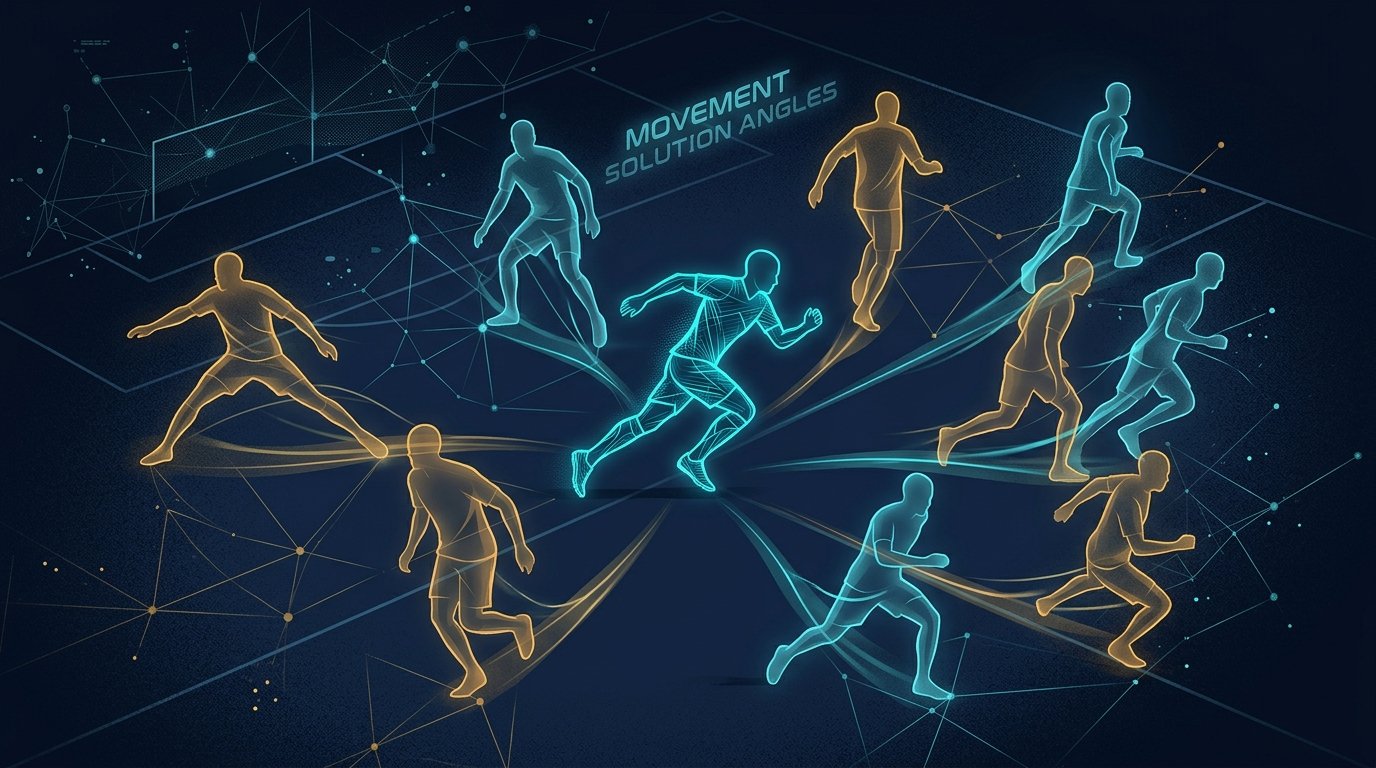
The most common mistake in coaching is providing the map—the exact, step-by-step answer to a problem—instead of the compass. When we give the answer, we kill the search. To develop elite, adaptable athletes, we must learn to manage the "Search Space," guiding players to discover their own functional solutions without ever telling them exactly what they are.
You’ve felt the urge. You’re watching a player struggle to break a high press. They are trapped, panicked, and turning the ball over. Your brain is screaming the answer: "Drop the ball back to the center-back!" "Shift the play to the left!" You want to shout it. You want to provide the map. You believe that by giving the correct answer, you are saving the player from failure.
But here is the hard truth: the "saved" player learns nothing. When you provide the answer, you essentially delete the learning process. You've solved the problem for them, which means the athlete's brain never had to engage in the effort of discovery. They didn't find a solution; they just obeyed a command. The moment you stop shouting from the sideline, they are lost again because they never developed the internal tools to navigate the problem.
You might be thinking: But I don't have time for them to "discover" everything. We have a game on Saturday. If I don't tell them the answer, we'll just keep losing the ball.
This is the fear that keeps most coaches in the "Map" mindset. But "discovery" doesn't mean letting players wander blindly in the dark. It means providing a compass—a set of constraints that makes the correct solution the most viable one.
Navigating the Search Space
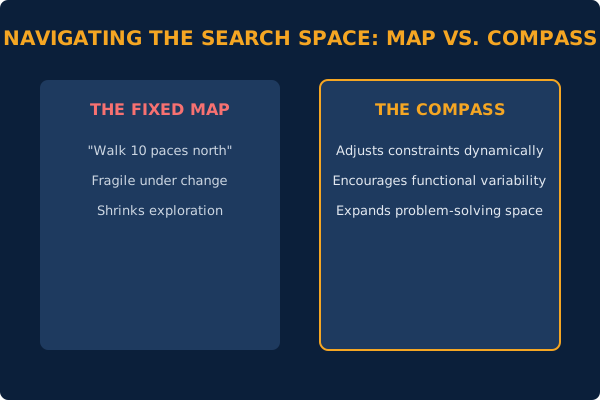
In ecological dynamics, we talk about the Search Space. The Search Space is the entire range of possible movements, decisions, and solutions available to an athlete in a given situation. Imagine it as a vast forest. The "correct" solution is a hidden clearing in that forest.
A prescriptive coach tries to draw a map: "Walk ten paces north, turn left at the oak tree, and you will find the clearing." This is efficient for the first ten minutes, but it's fragile. If the oak tree is gone or the path is blocked, the player is helpless.
The ecological coach, however, manages the search space. They don't give a map; they provide a compass. They adjust the boundaries of the forest—the constraints—to make the clearing easier to find.
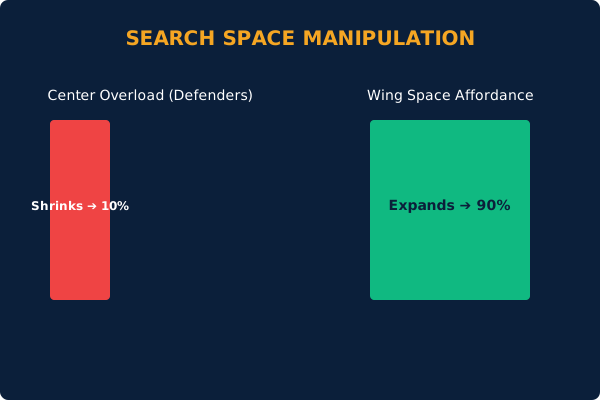
If you want your players to find the "clearing" of switching the play under pressure, you don't tell them to switch. Instead, you overload the center of the pitch with defenders. Suddenly, the "Search Space" for center-passes shrinks to zero, while the "Search Space" for wing-passes expands. The player is still searching, but you've made the correct solution the most obvious path.
Via Negativa: Guiding is NOT Abandoning
Let's be clear about what managing the search space is not. It is not "free play" where the coach simply stands back and hopes for the best. That is a lack of design.
It is not about letting a player commit a fundamental error that is dangerous or completely dysfunctional. If a player is putting themselves in a position to get injured, you intervene.
True guidance is the art of Indirect Influence. It is the ability to change the environment so that the athlete's own search leads them to the right answer. It is not about removing the struggle; it is about ensuring the struggle is productive.
The difference is the ownership of the solution. When a coach provides the map, the coach owns the solution. When the coach manages the search space, the athlete owns the solution. One is a temporary fix; the other is a permanent expansion of capability.
The Master's Eye
The transition from being a "Map-Provider" to a "Compass-Guide" is a journey of extreme restraint. It is the "Scar Tissue" of the veteran who has realized that their voice is often the loudest noise in the room—and the most distracting.
It is an agonizing experience to watch a player struggle for three minutes to solve a problem that you could explain in three seconds. Your ego wants the immediate success of the "correct" movement.
But that struggle is the only place where true mastery is forged. When a player finally "clicks" and finds the solution themselves, it is an epigenetic event. They haven't just learned a "tactic"; they have learned how to learn. They have developed the ability to search a chaotic environment and extract a functional solution.
Stop providing the map. Start providing the compass. Step back, adjust the constraints, and let your players find their own way home.
Stop Training Robots. Build Adaptive Athletes.
Join our community of forward-thinking coaches applying Ecological Dynamics in high-performance sports.
Explore The Adaptive Athlete