Seeing the Unseen: How Elite Players Read 'Possibilities' in the Game
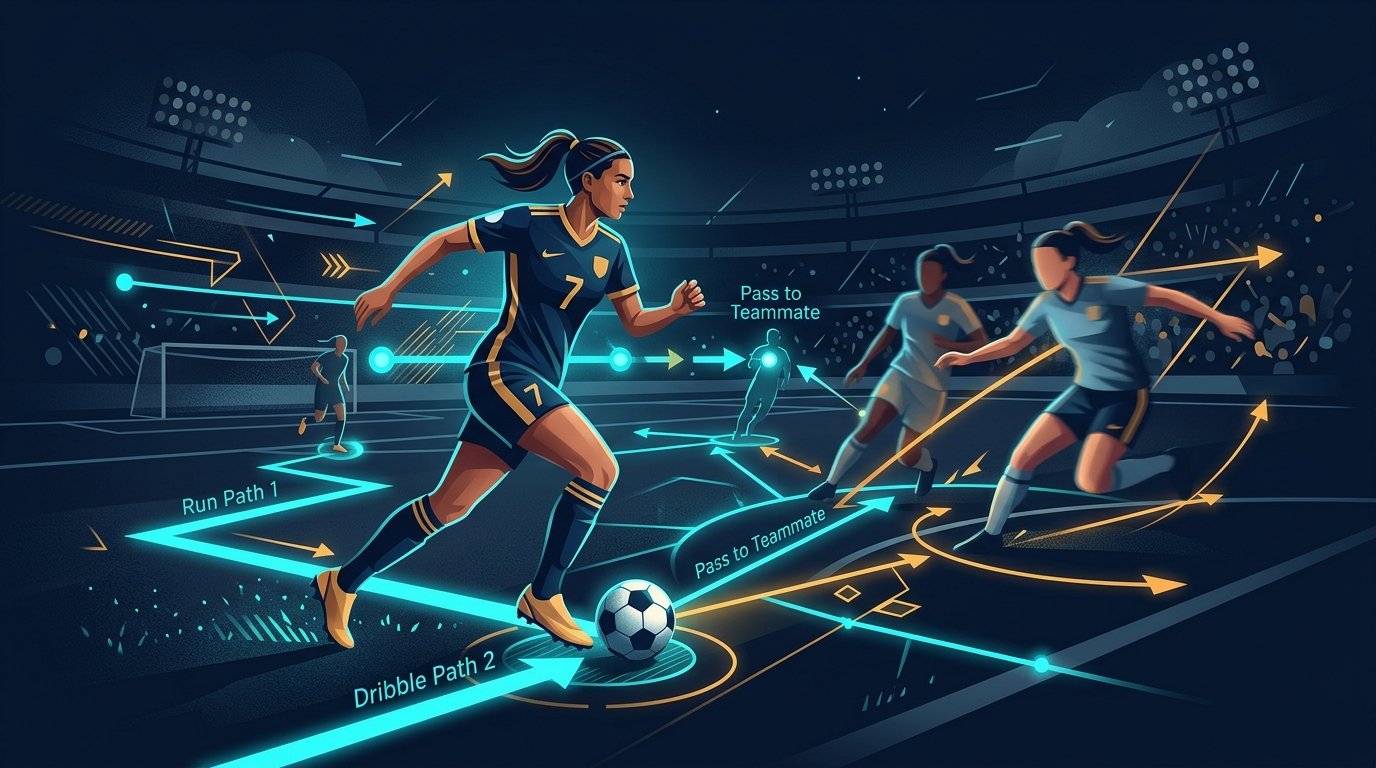
Elite performance isn't about having faster feet or stronger muscles; it's about seeing more possibilities in the environment than the opponent does. When we stop teaching athletes "where to stand" and start teaching them "what to look for," we unlock their ability to perceive the game as a map of opportunities.
You know the feeling. You’re watching a world-class midfielder—someone like De Bruyne or Modric—and they play a ball that seems to come from nowhere. To the average viewer, it looks like magic. To the amateur coach, it looks like "vision." We tell our players to "have more vision," as if vision is a volume knob we can simply turn up during a training session.
But vision isn't a trait. It's a relationship.
You might be wondering: Can vision actually be taught? If some players are just born with it, why bother with the theory?
The mistake we make is treating "vision" as a mental process—as if the player sees the field, processes the data in their head, and then decides on a pass. In reality, the best players aren't "calculating" the game. They are perceiving Affordances.
The Gap Between Objects and Opportunities
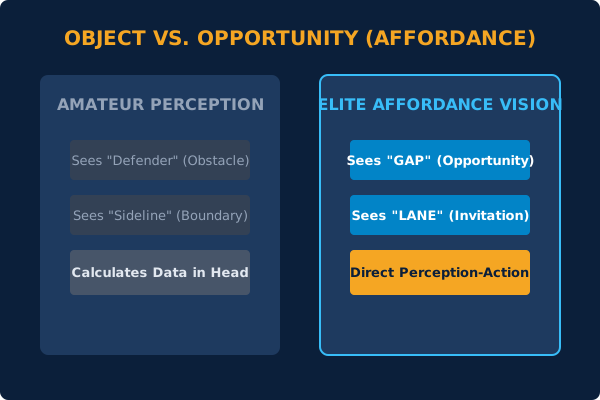
Most coaches teach their players to see objects. We tell them to see the defender, the sideline, the teammate, and the ball. We treat the pitch like a collection of obstacles to be navigated.
This is the fundamental error.
An elite player doesn't see a "defender" as an object; they see a "gap" as a possibility. They don't see a "teammate" as a person; they see a "passing lane" as an invitation.
In ecological dynamics, we call these possibilities Affordances. An affordance is not a property of the object itself, but a relationship between the environment and the athlete's capabilities. For example, a gap in the defense is only an "affordance for a through-ball" if the player has the passing range to hit it. If they can't kick the ball that far, the gap isn't an affordance—it's just empty space.
The "magic" of elite players is that they have a highly tuned ability to perceive these invitations instantly. They aren't thinking; they are responding to the environment's "suggestions."
The Danger of the Prescriptive Drill
This is why traditional, prescriptive drills often fail.
When we set up a drill with cones and tell players, "Move here, then pass there," we are removing the affordances. We are telling them exactly what the solution is before they have even perceived the problem. We are training them to follow a script, not to read a game.
If the environment is static, the athlete's perception goes to sleep. They stop looking for possibilities because the "possibility" has been dictated by the coach. When they hit the real pitch, they "freeze" because they are searching for the coach's instructions instead of the game's invitations.
Training the Eye: How to Design for Perception
To build players who can "see the unseen," we must move from prescribing solutions to designing invitations.
Instead of telling a player where to pass, we manipulate the constraints to create a specific affordance. If you want a player to perceive the possibility of a switch of play, don't tell them to "look for the opposite wing." Instead, overload one side of the pitch with defenders. Suddenly, the opposite wing is no longer just "the other side"—it becomes a massive, glaring affordance for a successful attack.
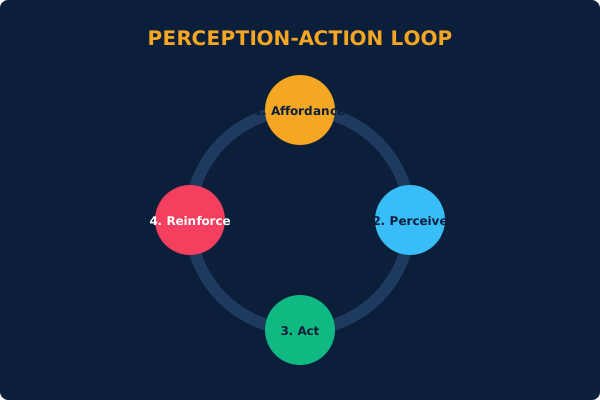
The goal is to create a "Perception-Action Loop." 1. The environment offers an invitation (the Affordance). 2. The player perceives it. 3. The player acts upon it.
When the action succeeds, the perception is reinforced. The athlete learns: "When the defender's hips are turned this way, the gap behind them becomes an invitation."
The Master's Eye
The hardest part of this shift for a coach is the silence. It requires us to stop giving the answers. It means watching a player miss a wide-open pass and resisting the urge to scream, "Look for the open man!"
That urge comes from our own "Scar Tissue"—the fear that if we don't provide the answer, the player won't learn. But the opposite is true. If you provide the answer, you steal the learning.
Mastery is the ability to see the pitch not as a series of problems to be solved, but as a symphony of possibilities waiting to be claimed. Stop teaching your players how to follow your map. Teach them how to read the landscape.
Stop Training Robots. Build Adaptive Athletes.
Join our community of forward-thinking coaches applying Ecological Dynamics in high-performance sports.
Explore The Adaptive Athlete